How to Make Money on PrizePicks Esports in 2026
The math-first approach to PrizePicks esports: target 60%+ confidence plays, hit opening lines, and let volume do the work.
I've been betting esports props on PrizePicks for three years now. Here's what actually works if you want a long-term edge.
PrizePicks is one of the most popular DFS platforms in North America for a reason. No spreads. No sides. Just player props. Pick over or under, combine them into slips, and get paid if the math works out.
Sounds simple. It is. The hard part is doing it profitably.
Most PrizePicks players do the same thing: pick their favorite players, bet their overs, and hope the slip hits. Sometimes it works. Over time, that approach bleeds money.
If you want a real edge, you need a repeatable process built on pricing mistakes, line timing, and bankroll discipline. Not vibes.
That's also where most people fall off. By the time you research a slate, compare lines, and build slips manually, the best numbers are already gone. Esports DFS rewards speed and volume more than anything else.
Why Esports on PrizePicks Is Different
If you've bet NFL or NBA props, esports on PrizePicks might look the same on the surface. It's not.
The books haven't caught up yet.
In traditional sports, PrizePicks and books like DraftKings have large teams pricing player props. The lines are sharp. Finding real edge is harder because too many sharp eyes are on the same data.
Esports is a much thinner market. The platforms posting esports props don't have the same depth of modeling behind them. They're often working from basic averages while the competitive landscape shifts constantly: patches, roster changes, role swaps, meta developments.
That gap between how lines are priced and what's actually happening in the game is where the money is.
The edge isn't just in being right about a player. It's in finding mispriced esports props early enough to bet them before PrizePicks adjusts the number.
The Basics: How PrizePicks Payouts Work
Each slip type on PrizePicks implies a break-even hit rate. The better the payout structure, the easier it is to turn a real edge into actual profit.
When I say implied odds, I mean the win rate you'd need for that slip type to break even over time. Lower implied odds = you don't need to be right as often to stay profitable.
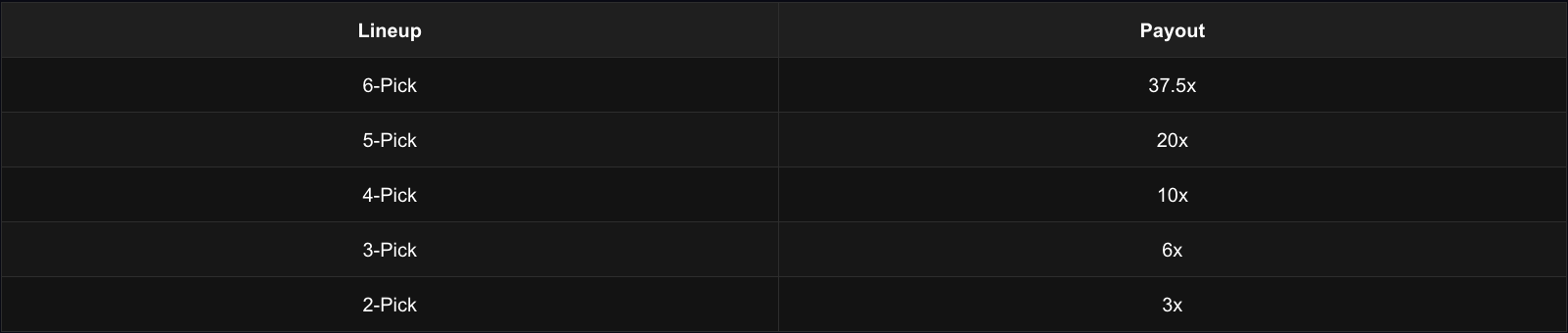
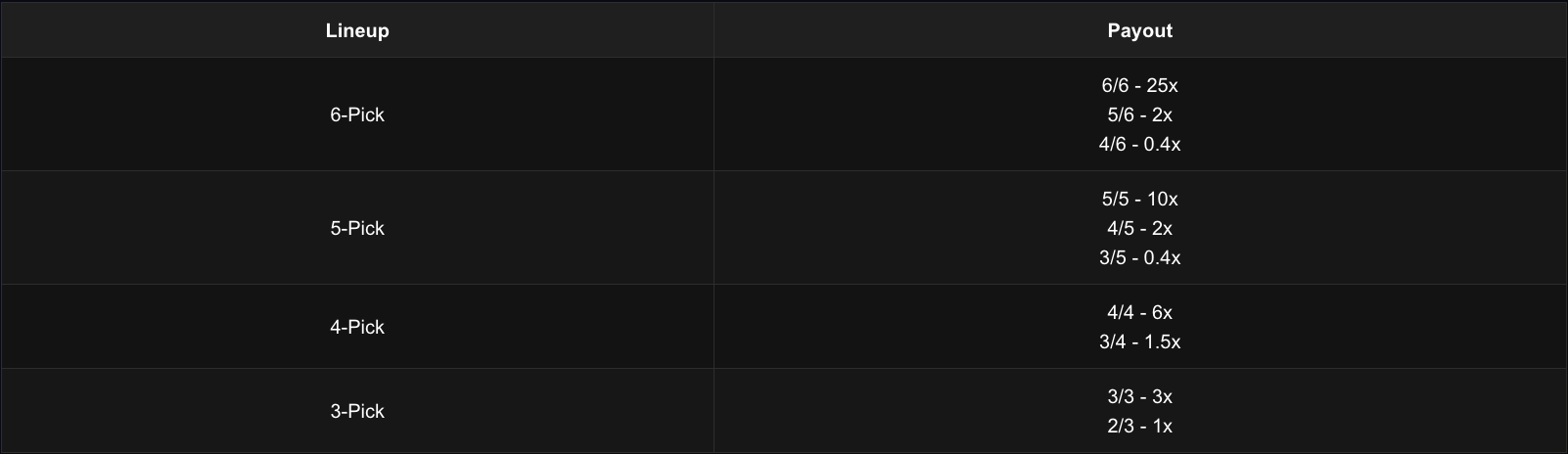
| Slip Type | Break-Even / Implied Odds | Why It's Strong |
|---|---|---|
| 3-pick power | -122 | Best mix of payout quality and lower variance because you only need three legs. |
| 5-pick flex | -118 | Elite structure because you still salvage a 2x if you hit 4 of 5. |
| 6-pick flex | -118 | Same implied value as 5-pick flex, but with more variance. |
| 6-pick power | -121 | Strong payout on paper, but much higher variance because every leg has to hit. |
The math starts working in your favor when your per-pick win rate is consistently above 60%.
That's why our model only fires on plays rated 60% confidence or higher. Below that, the margin gets thin fast.
The Strategy That Actually Works
Here's the actual framework I use to bet PrizePicks esports profitably: focus on 60%+ plays, prioritize opening lines, diversify across games, size small, and track everything.
Step 1: Only bet plays rated 60%+ confidence
At a 60%+ hit rate over time, the math on PrizePicks payouts is genuinely positive. Below 60%, you're grinding against the vig.
This is why a real model matters. You need something that scores every prop the same way instead of you eyeballing which overs "feel right."
Step 2: Bet the opening line
Honestly, this matters more than anything else on this list.
When lines first drop on PrizePicks, the +EV window is widest. Say a player's kill line opens at 4.5 and sharp action immediately hits the over. PrizePicks moves it to 5.5. The edge that existed at 4.5 is completely gone at 5.5.
Our opening-line performance on 60%+ plays: 29% ROI, 60% win rate.
Turn on notifications. Be ready when lines drop. If a line has already moved more than 10% from the open, the edge is usually gone. Move on.
This is why we built the product around real-time alerts, not a static picks sheet. The slip builder refreshes as lines move so you can see what still has value and skip stale props.
Step 3: Spread across multiple games and slips
This is where a lot of bettors leave money on the table without realizing it.
Don't load five picks from the same LoL slate into one card. Spread exposure across different matches, different players, and different titles. One upset or one weird slate shouldn't be able to tank your whole day.
Our model fires across League of Legends, Dota 2, CS2, VALORANT, and COD. On busy days, that gives you real diversification across uncorrelated games.
Step 4: Size consistently
PrizePicks is a volume game, not a "go big on your best play" game.
We place hundreds of slips per month. The edge shows up in aggregate, not on any single bet. Keep individual slip sizes around 0.5% to 1% of bankroll. You're compounding small edges over hundreds of bets, not trying to land one miracle slip.
That kind of volume is hard to manage by hand. It gets a lot easier when your slips are already built and you just apply the same sizing rules every day.
Step 5: Track everything
If you're not tracking results, you genuinely don't know if your strategy works. You might think you're up when you're down. You might think LoL is your strongest title when it's quietly dragging your ROI.
Track every slip: date, picks, game, result. Review monthly. No exceptions.
Pikkit is a solid free option — it connects to your books and tracks every play automatically. Use this Pikkit link to set it up.
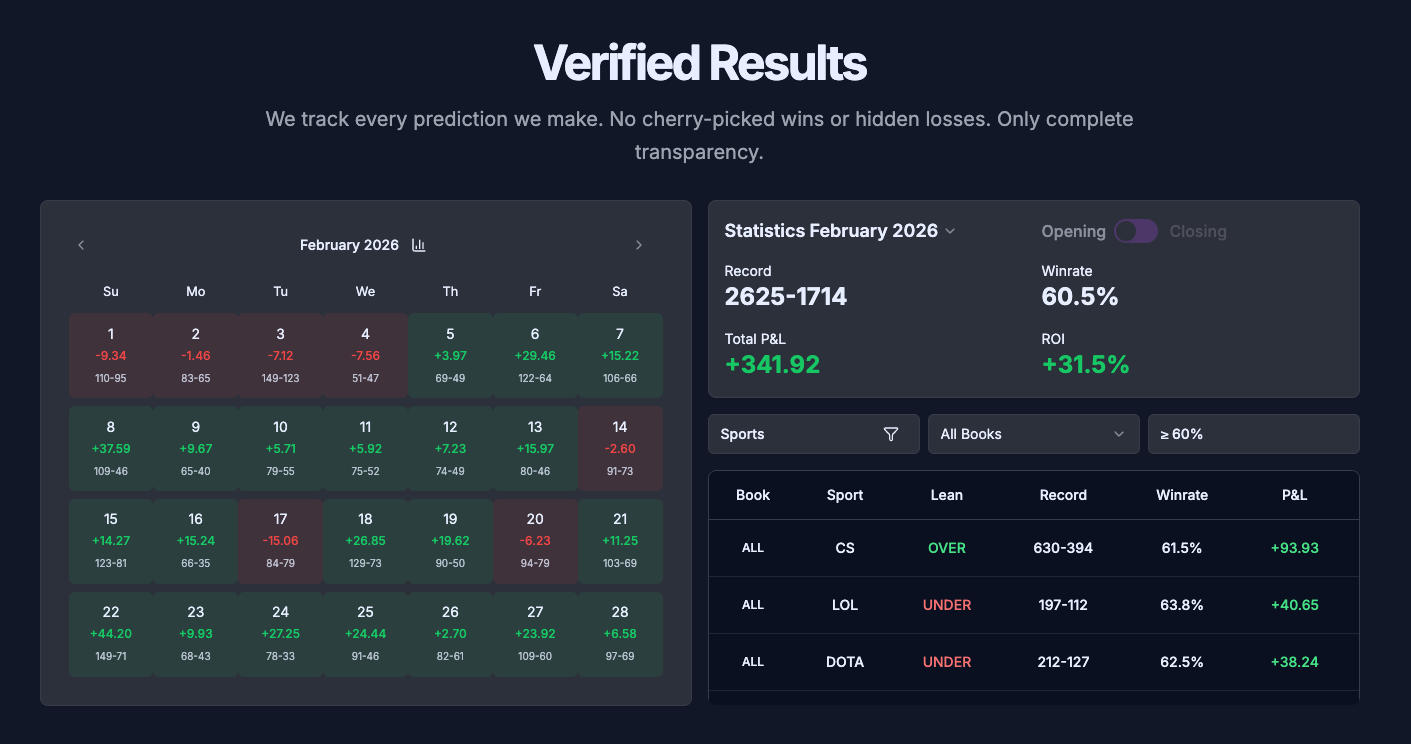
We track everything on our side too. Transparent results are what separate a real betting tool from a capper service posting screenshots after the fact.
What This Looks Like in Real Numbers
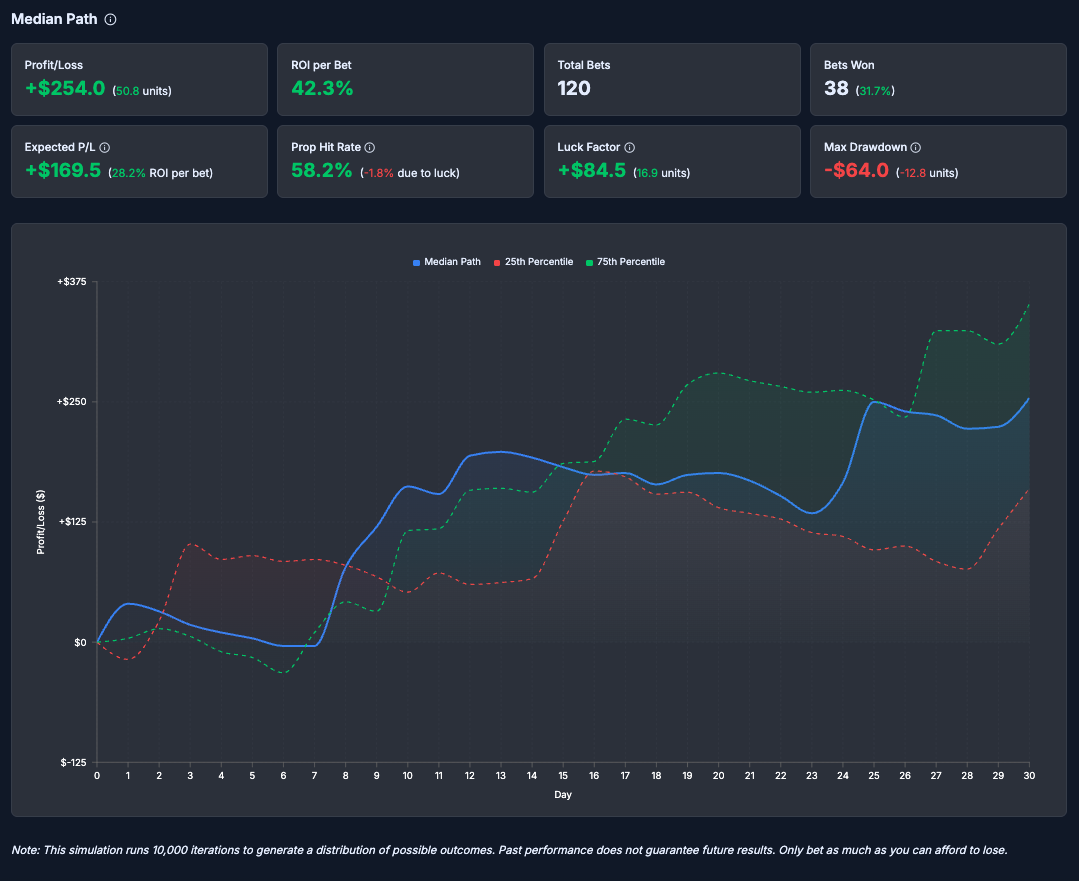
Here's a 30-day simulation for a $5 unit bettor following the model on PrizePicks and Underdog Fantasy.
Fair warning: these show what the edge looks like over volume, not what every single month will produce. Variance is real and some months will be worse.
PrizePicks scenario
- 4 five-man flex slips per day
- Historical ROI at this format: about 42.3%
- Monthly expected profit: $254
Underdog Fantasy scenario
- 10 three-man power slips per day
- Historical ROI at this format: about 30%
- Monthly expected profit: $450
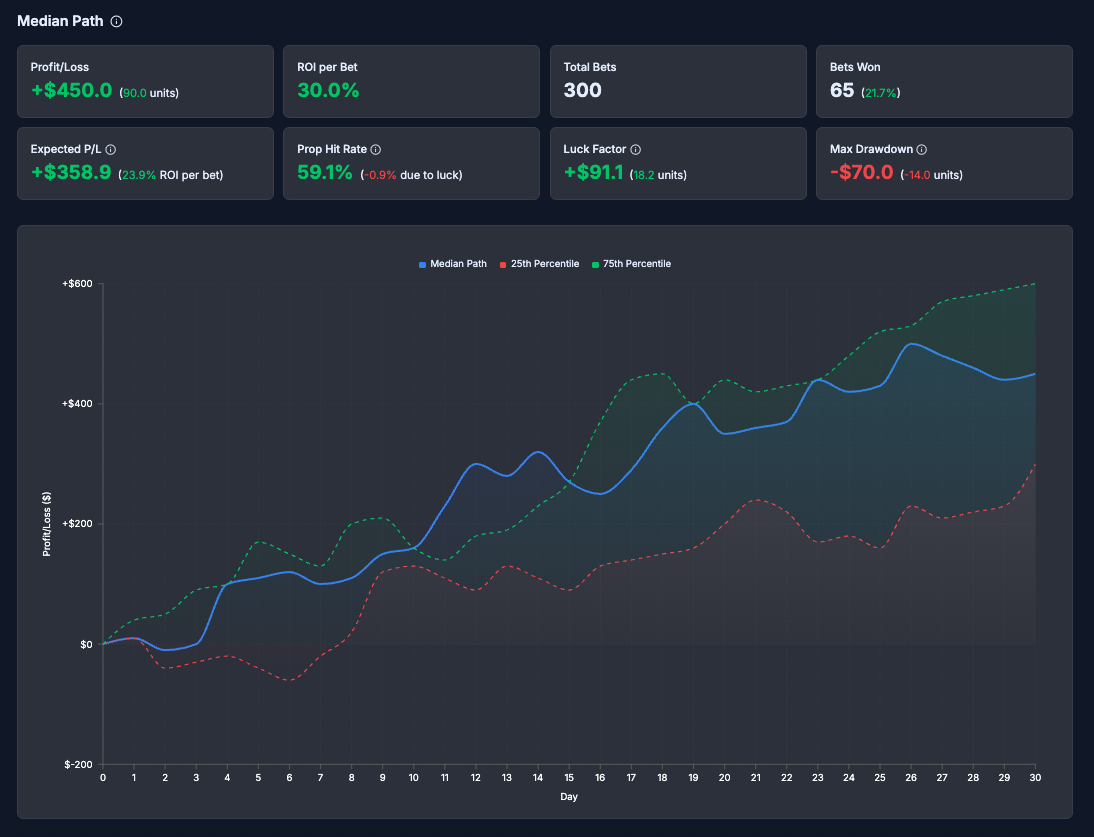
Combined, that's $804 in expected profit over 30 days on $5 slips.
These numbers come from historical performance across 25,000+ tracked props at the 60%+ confidence threshold. Not a cherry-picked week. Not screenshots from a heater.
The sample size is the whole point. It's a large, tracked dataset of esports props with public results behind every number.
Common Mistakes to Avoid
- Betting bumped lines. If the line moved, the edge moved with it. Walk away.
- Going too heavy on single slips. PrizePicks rewards disciplined volume, not big individual bets.
- Betting with your heart. Your favorite team doesn't matter. The only question is whether the prop is +EV right now.
- Quitting after a bad week. Even with a real edge, you'll have losing stretches. That's variance, not a broken strategy.
The Bottom Line
Making money on PrizePicks esports comes down to finding mispriced props and betting them before the market adjusts. The concept is straightforward. Executing it every day is the hard part.
You need to identify the right props fast, filter out the weak ones, and do it consistently enough for the edge to compound. Most people don't have the time or the tooling to do that manually.
That's what we built. A live esports betting model with real-time projections, a slip builder, alerts when profitable lines drop, and transparent tracking across every prop. Three-year track record, 25,000+ props tracked, 60%+ win rate at the confidence threshold that matters.
Once you get the workflow down, it takes about 15 minutes a day to review the board and place slips.
Disclaimer
Betting involves risk, and past performance does not guarantee future results. Please bet responsibly.